
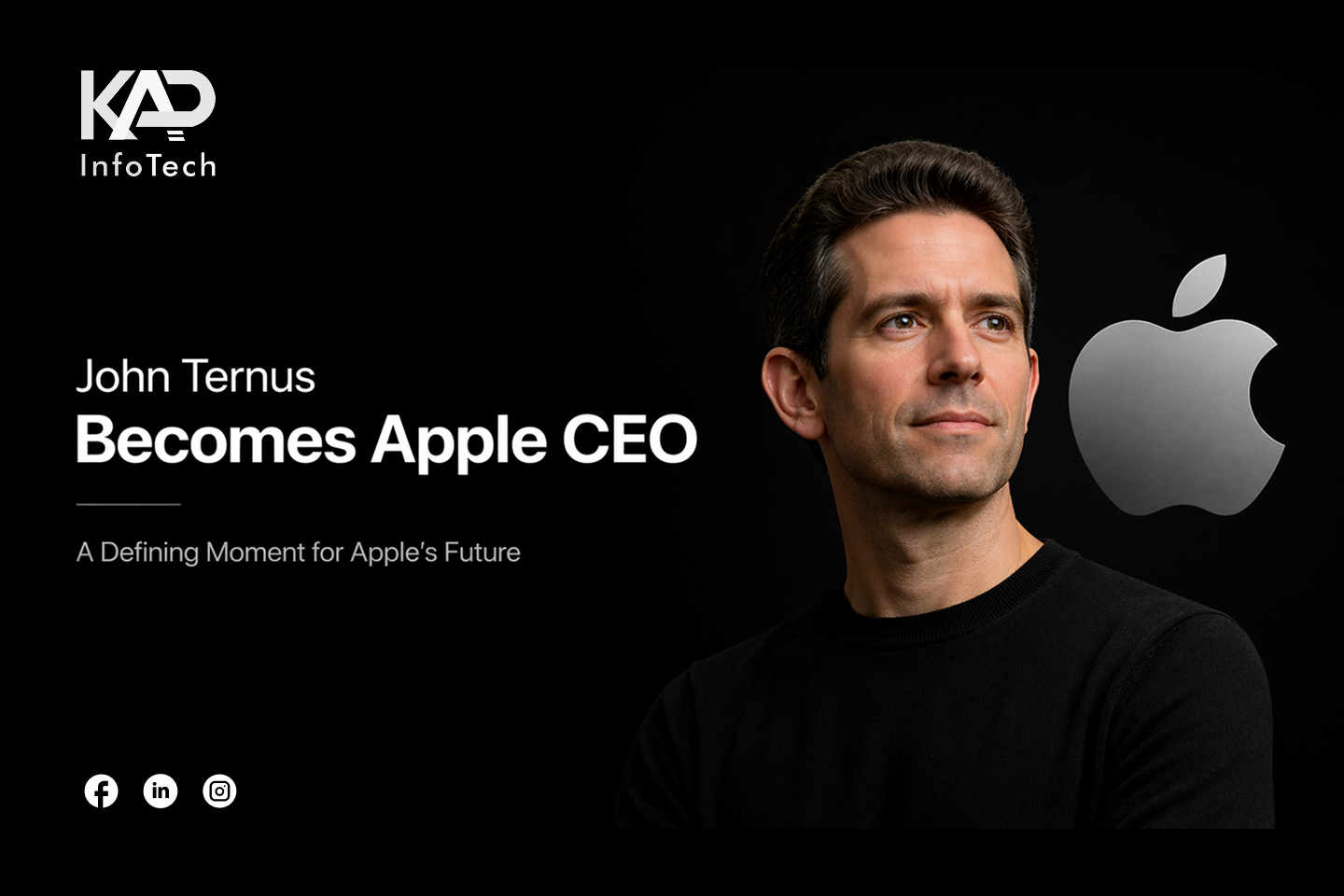
Apple has officially announced one of the most significant leadership transitions in its modern history. John Ternus, Apple’s Senior Vice President of Hardware Engineering, has been selected as the next Chief Executive Officer, marking a major shift in the company’s leadership structure.
The announcement was made on April 21, 2026, with the transition set to take effect on September 1, 2026. Tim Cook, who has led Apple since 2011, will move into the role of Executive Chairman.
This change is not just a leadership update—it represents a strategic pivot that could define Apple’s direction in the next decade.
Timeline of the Leadership Transition
Understanding the timeline is critical for context:
- April 21, 2026 – Official announcement of John Ternus as incoming CEO
- April to August 2026 – Transition and knowledge transfer period
- September 1, 2026 – Ternus officially assumes CEO role
- Post-September 2026 – Tim Cook transitions to Executive Chairman
This structured transition indicates that Apple is prioritizing continuity, stability, and strategic alignment rather than abrupt change.
Who is John Ternus?
John Ternus is not an outsider or a sudden appointment. He has been deeply embedded within Apple for over two decades.
Background Overview
- Joined Apple around 2001
- Rose through hardware engineering leadership
- Became Senior Vice President of Hardware Engineering
- Led development of key Apple products including:
- iPhone hardware systems
- Mac lineup (including Apple Silicon transition)
- iPad and internal device architecture
Unlike Tim Cook, who came from an operations and supply chain background, Ternus is fundamentally a product and engineering-focused leader.
Why Apple Chose John Ternus
This decision is strategic, not symbolic. Several key factors explain why Ternus was chosen:
1. Deep Product Expertise
Apple is a product-driven company. Ternus has been directly involved in building its most important devices.
2. Engineering-First Leadership
Apple is entering an era where hardware and AI integration will define success. An engineering-led CEO aligns with this direction.
3. Internal Stability
Promoting from within ensures:
- Cultural continuity
- Minimal disruption
- Strong alignment with Apple’s long-term vision
4. Proven Execution Track Record
Ternus played a critical role in:
- Apple Silicon transition (Intel to in-house chips)
- Performance-focused Mac evolution
- Hardware innovation cycles
Tim Cook’s Role After Transition
Tim Cook is not exiting Apple. Instead, he will become Executive Chairman.
What This Means
- He will still influence high-level strategy
- Provide continuity and mentorship
- Maintain investor and board confidence
Cook’s legacy includes:
- Massive revenue growth
- Expansion into services
- Supply chain excellence
- Global brand dominance
This transition ensures Apple retains Cook’s strategic oversight while enabling new leadership.
Strategic Implications for Apple
1. Stronger Focus on Hardware Innovation
Ternus’s background suggests Apple will double down on:
- Advanced chip design
- Device performance
- Hardware-software integration
2. AI-Integrated Ecosystem
Apple is behind competitors in visible AI deployment. Under Ternus, expect:
- AI deeply embedded in devices
- On-device intelligence focus (privacy-first AI)
- Integration across iPhone, Mac, and wearables
3. Product-Led Growth Strategy
Apple may shift further toward:
- Breakthrough product categories
- Innovation cycles rather than incremental upgrades
4. Potential New Categories
Possible expansion areas:
- AR/VR ecosystem refinement
- AI-native devices
- Health-tech hardware
- Smart ecosystem expansion
How This Compares to Previous CEO Transitions
Steve Jobs → Tim Cook (2011)
- Shift from product visionary to operations expert
- Focus on scaling and profitability
Tim Cook → John Ternus (2026)
- Shift back toward product and engineering leadership
- Focus on innovation and future technologies
This indicates a full-cycle evolution in Apple’s leadership philosophy.
Market and Industry Impact
The tech industry is closely watching this transition.
Investor Perspective
- Generally positive due to planned transition
- Confidence due to internal successor
- Stability maintained through Cook’s continued role
Competitor Reaction
Competitors like Google, Microsoft, and Samsung will:
- Monitor Apple’s AI direction
- Adjust hardware strategies accordingly
Talent and Hiring Impact
- Increased focus on AI engineers
- Hardware innovation roles gain importance
Risks and Challenges
Despite strong positioning, Ternus faces significant challenges:
1. AI Competition
Apple is competing against:
- Google (AI dominance)
- Microsoft (AI + enterprise integration)
2. Innovation Pressure
Expectations will be extremely high:
- Next “iPhone-level” innovation
- Breakthrough product launches
3. Maintaining Growth
Apple must continue:
- Revenue expansion
- Ecosystem dominance
4. Balancing Privacy vs AI
Apple’s privacy-first approach must align with:
- Data-driven AI models
- User expectations
What to Expect in the Next 3–5 Years
Under John Ternus, Apple’s roadmap may include:
- AI-powered iPhones with deeper on-device intelligence
- Advanced Apple Silicon chips outperforming competitors
- Stronger Mac ecosystem growth
- Expansion into mixed reality and wearable tech
- Seamless ecosystem integration across all devices
Final Analysis
The appointment of John Ternus as CEO is not just a leadership change—it is a strategic recalibration.
Apple is preparing for its next phase:
- From operational excellence to innovation leadership
- From incremental updates to transformational technology
- From ecosystem dominance to AI-integrated future
The success of this transition will depend on how effectively Ternus can:
- Accelerate innovation
- Compete in AI
- Maintain Apple’s premium positioning
FAQ Section
When was John Ternus announced as Apple CEO?
He was officially announced on April 21, 2026.
When will John Ternus become CEO of Apple?
He will take over as CEO on September 1, 2026.
What role will Tim Cook have after stepping down?
Tim Cook will become Executive Chairman of Apple.
What is John Ternus known for?
He is known for leading Apple’s hardware engineering and contributing to major product developments.
Why is this leadership change important?
It signals Apple’s shift toward engineering-led innovation, especially in AI and hardware integration.
Conclusion
Apple’s decision to appoint John Ternus as CEO reflects a clear and calculated move toward the future. With a strong engineering foundation and deep product expertise, Ternus represents the next phase of Apple’s evolution.
The coming years will determine whether this transition leads to Apple’s next major breakthrough—or simply reinforces its existing dominance.
Either way, this is one of the most important leadership changes in the tech industry today.